
Zinc Advantage
Addressing Zinc Deficiency in Soils
PROBLEM:
Zinc deficiency is the most common micronutrient deficiency, affecting more than 50% of the world’s agricultural soils.
SOLUTION:
Zinc fertilizer increases crop yield and improves water uptake, resulting in healthier, stronger crops.
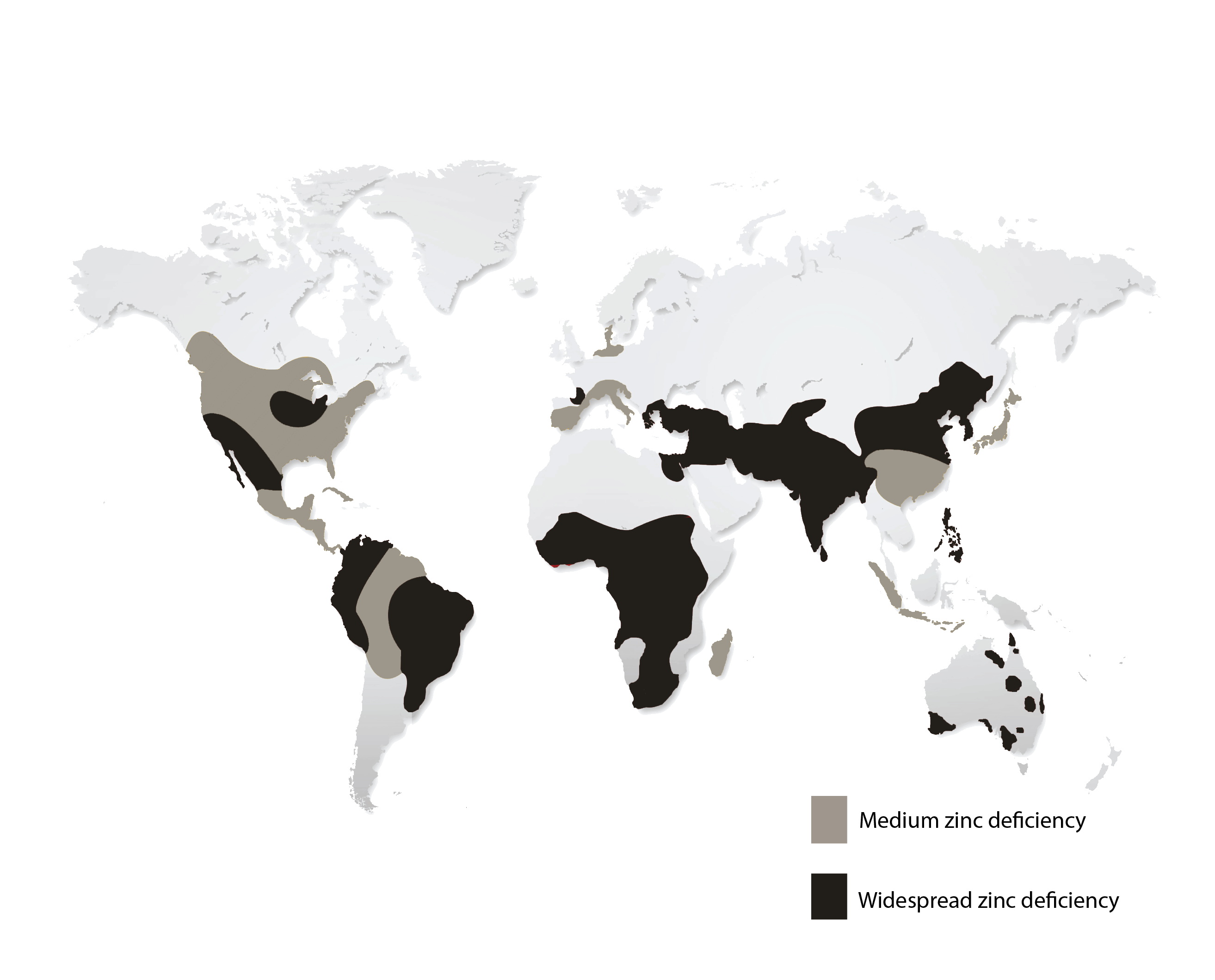
Credit: Brian J. Alloway
Zinc is essential for normal growth and reproduction.
A landmark study in 1982 found zinc was the most widespread micronutrient deficiency, resulting in smaller crops prone to drought, heat stress and infection. Applying zinc fertilizers to soil and on plant leaves effectively solves this deficiency and significantly increases food and nutrition security.
Addressing Food Security
PROBLEM:
By 2050 the world’s population will reach 9.1 billion. In order to feed this larger population, food production must increase by 70%*
SOLUTION:
Zinc fertilizer increases the yield and quality of crops, improving food security and increased income for farmers.
Addressing Zinc Deficiency in Humans
PROBLEM:
2 Billion
people worldwide are zinc deficient.
800,000
people die each year from diseases of zinc deficiency.
450,000
of those deaths are from children under the age of five. *Black et. al, 2008
SOLUTION:
According to the Copenhagen Consensus, zinc and Vitamin A were identified as the most cost-effective solution to malnutrition. Zinc fertilizer increases the nutritional value of crops, resulting in increased zinc nutrition in the diet.
Zinc is an essential micronutrient that is crucial for growth, brain development, and fighting dangerous infections, especially in children. Zinc-rich foods include meat, poultry, seafood and nuts. However, many people in developing countries have plant-based diets that do not provide enough zinc for healthy development. Adding zinc fertilizers to crops increases zinc in the diet.
Zinc is a life-saving commodity.
Contact Us
To learn more about our program or become a member,
email Zinc Nutrient Initiative Director Dr. Soumitra Das at sdas@zinc.org.